📋 Quick Comparison Summary
- Acidity: Indonesian cocoa is naturally less acidic (pH 5.2-5.8) than African (pH 4.8-5.2)
- Flavor: Indonesian = earthy, complex | African = fruity, classic chocolate
- Production: Africa produces ~55% of global cocoa; Indonesia ~13%
- Logistics: Indonesian cocoa reaches Asian markets 2-3 weeks faster
- Best Use: Indonesian for Asian markets, blending, lower alkalization needs
Introduction
In procurement, this is rarely an academic question. The origin you choose changes your cost base, formulation behavior, and delivery risk. This guide compares Indonesian cocoa (primarily Sulawesi) and African cocoa (Ivory Coast and Ghana) in the same way we would brief a purchasing or R&D team.
Think of this as a practical decision tool: which origin fits your market, your flavor target, and your compliance requirements.
Production Overview
| Metric | Indonesia | West Africa (Ivory Coast + Ghana) |
|---|---|---|
| Annual Production | ~700,000 metric tons | ~3 million metric tons |
| Global Share | ~13% | ~55% |
| Primary Region | Sulawesi (70%) | Ivory Coast & Ghana |
| Harvest Season | Year-round (dual peak) | Oct-Mar (main crop) |
Chemical & Physical Characteristics
Acidity (pH Level)
One of the most significant differences between Indonesian and African cocoa:
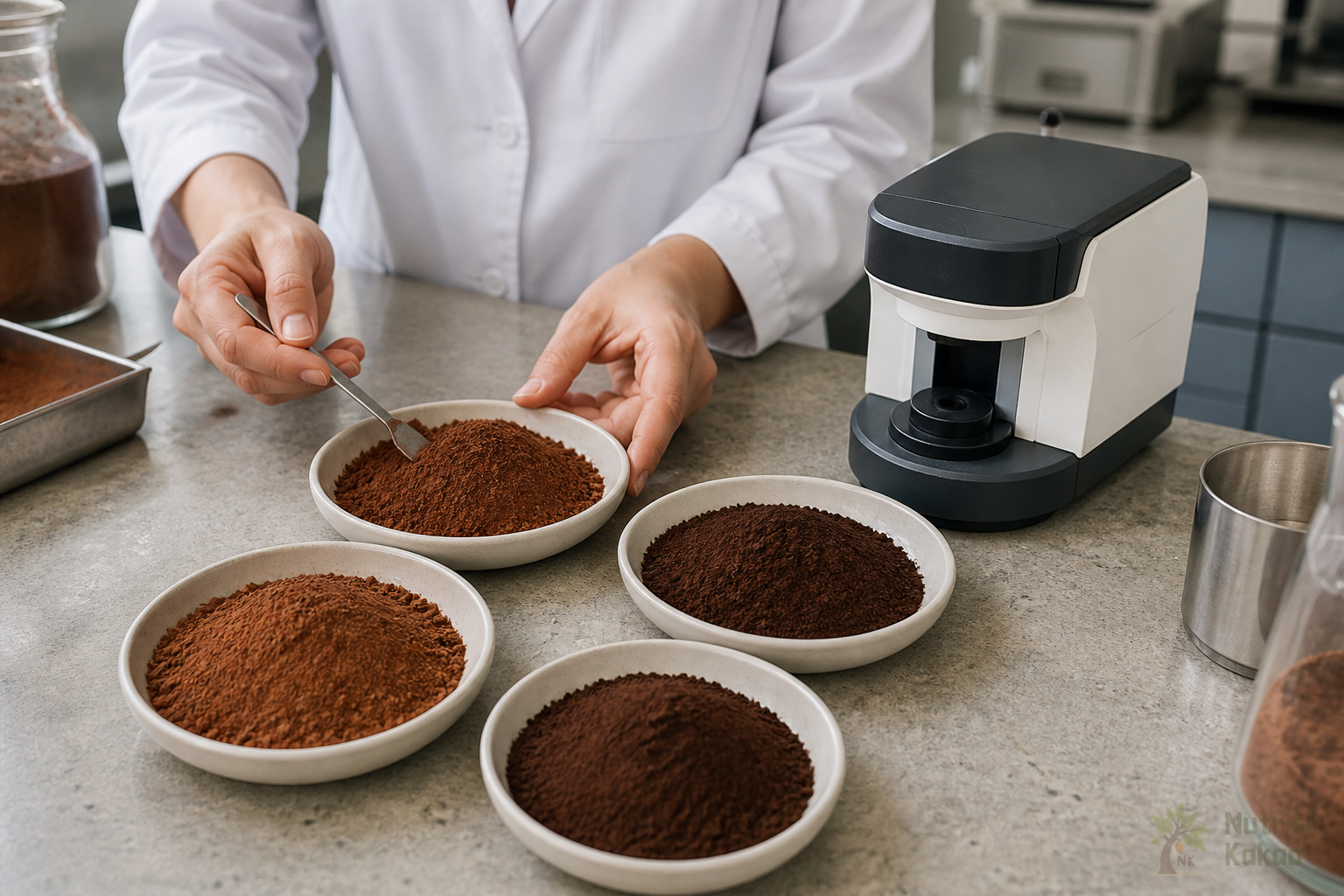
- Indonesian (Sulawesi): pH 5.2 - 5.8 (naturally less acidic)
- African (Ivory Coast/Ghana): pH 4.8 - 5.2 (more acidic)
Why This Matters:
- Indonesian cocoa requires less alkalization to achieve neutral pH
- Lower processing costs for Dutch process cocoa
- Smoother natural flavor without alkalization
Fat Content
Both origins offer similar fat content ranges, typically:
- Standard: 10-12%
- Low-fat: 4-8%
- High-fat: 20-22%
Flavor Profile Comparison
| Characteristic | Indonesian Cocoa | African Cocoa |
|---|---|---|
| Primary Notes | Earthy, woody, mineral | Fruity, classic chocolate |
| Secondary Notes | Nutty, complex | Berry, wine-like |
| Bitterness | Moderate | Pronounced |
| Astringency | Low | Moderate to high |
Logistics & Supply Chain
Shipping Times to Key Markets
| Destination | From Indonesia | From West Africa | Advantage |
|---|---|---|---|
| China | 2-3 weeks | 5-6 weeks | Indonesia +2-3 weeks |
| Europe | 4-5 weeks | 2-3 weeks | Africa +2 weeks |
| Middle East | 2-3 weeks | 3-4 weeks | Indonesia +1 week |
| USA (West Coast) | 3-4 weeks | 4-5 weeks | Indonesia +1 week |
Which Origin Should You Choose?
Choose Indonesian Cocoa When:
- Your market is in Asia-Pacific (shorter logistics)
- You need lower acidity without heavy alkalization
- You want earthy, complex flavor profiles
- You're creating blends and need flavor complexity
- Supply chain speed is critical
- You need Rainforest Alliance + Halal certification together
Choose African Cocoa When:
- Your market is in Europe (shorter logistics)
- You want classic "chocolate" flavor profile
- You're producing traditional European-style chocolate
- Higher volume availability is required
- You need Fairtrade certification specifically
Consider Blending Both When:
- You want to balance flavor complexity
- You need supply chain risk diversification
- Creating unique proprietary flavor profiles
Pricing Comparison
Generally, Indonesian and African cocoa are competitively priced, with variations based on:
- Quality grade and certifications
- Processing level (beans vs powder)
- Current market conditions
- Order volume
Note: Indonesian suppliers often offer cost advantages for Asian buyers due to lower shipping costs and faster delivery times.
💡 PT Nutrisi Kakao Indonesia: Your Indonesian Cocoa Partner
As a leading Indonesian cocoa powder manufacturer, PT Nutrisi Kakao Indonesia (NK Cocoa) offers premium Sulawesi cocoa with all the advantages discussed above:
- ✅ Factory in Sulawesi - the heart of Indonesian cocoa
- ✅ Natural low-acidity cocoa (pH 5.2-5.8)
- ✅ Full product range: Natural, Alkalized, Black cocoa powder
- ✅ 5,000+ tons annual capacity
- ✅ ISO 22000, HACCP, HALAL, Rainforest Alliance certified
- ✅ Export experience to 30+ countries
Contact us: [email protected] | WhatsApp: +62 852 1162 9257
Get a Quote →Conclusion
Both Indonesian and African cocoa have their place in the global market. Indonesian cocoa excels in natural low acidity, complex flavor profiles, and strategic logistics for Asian markets. African cocoa dominates in volume and traditional chocolate flavor. Smart manufacturers often use both origins strategically, leveraging the unique advantages of each.
For buyers prioritizing the Asian market, sustainability certifications, and natural low-acidity cocoa, Indonesian suppliers like PT Nutrisi Kakao Indonesia offer compelling advantages worth considering.