🎯 Quick Decision Framework
Choosing cocoa powder comes down to three key decisions:
- Type: Natural vs. Alkalized (Dutch) vs. Black
- Fat Content: Low (4-8%), Standard (10-12%), High (20-22%)
- pH Level: Acidic (5.0-6.0) vs. Neutral (6.5-7.5) vs. High (7.5-8.5)
The Science Behind Cocoa Powder Selection
Cocoa powder is never one-size-fits-all. The type you choose changes flavor, color, texture, and chemical reactions in the finished product. Use this as a quick technical filter before you lock in specs.
Decision Matrix: Cocoa Powder by Application
| Application | Recommended Type | Fat Content | pH Range | Why? |
|---|---|---|---|---|
| Classic Brownies | Natural | 10-12% | 5.2-5.8 | Acidic cocoa reacts with baking soda for lift |
| Chocolate Cake | Alkalized Brown | 10-12% | 6.2-7.0 | Consistent color, works with baking powder |
| Oreo-Style Cookies | Black Cocoa | 10-12% | 7.6-8.5 | Deep black color, signature flavor |
| Hot Chocolate Mix | Alkalized, High Fat | 20-22% | 6.5-7.5 | Creamy mouthfeel, better suspension |
| Ice Cream | Alkalized Dark | 10-12% | 7.0-7.8 | Better dispersion in dairy, rich color |
| Protein Bars | Alkalized Low Fat | 4-8% | 6.5-7.5 | Lower calories, good binding |
| Chocolate Coating | Alkalized Brown | 10-12% | 6.5-7.5 | Smooth finish, consistent color |
| Red Velvet Cake | Alkalized Reddish | 10-12% | 7.2-8.0 | Natural reddish hue, less dye needed |
Understanding the Leavening-Cocoa Relationship
⚠️ Critical Rule for Bakers
- Natural Cocoa (acidic) + Baking Soda (alkaline) = Leavening reaction ✓
- Dutch Cocoa (neutral) + Baking Powder (contains acid) = Leavening reaction ✓
- Natural Cocoa + Baking Powder only = May taste sour, poor rise ✗
- Dutch Cocoa + Baking Soda only = Flat, soapy taste ✗
Fat Content: When It Matters Most
Low Fat (4-8%)
- ✅ Best for: Diet products, protein supplements, dusting
- ✅ Benefits: Lower calories, stronger cocoa flavor per gram
- ❌ Avoid for: Beverages (poor suspension), rich desserts
Standard (10-12%)
- ✅ Best for: General baking, confectionery, most applications
- ✅ Benefits: Balanced flavor and functionality, cost-effective
- This is the most versatile and widely used grade
High Fat (20-22%)
- ✅ Best for: Premium hot chocolate, luxury applications, coatings
- ✅ Benefits: Creamy mouthfeel, richer flavor, better suspension
- ❌ Avoid for: Diet products, cost-sensitive applications
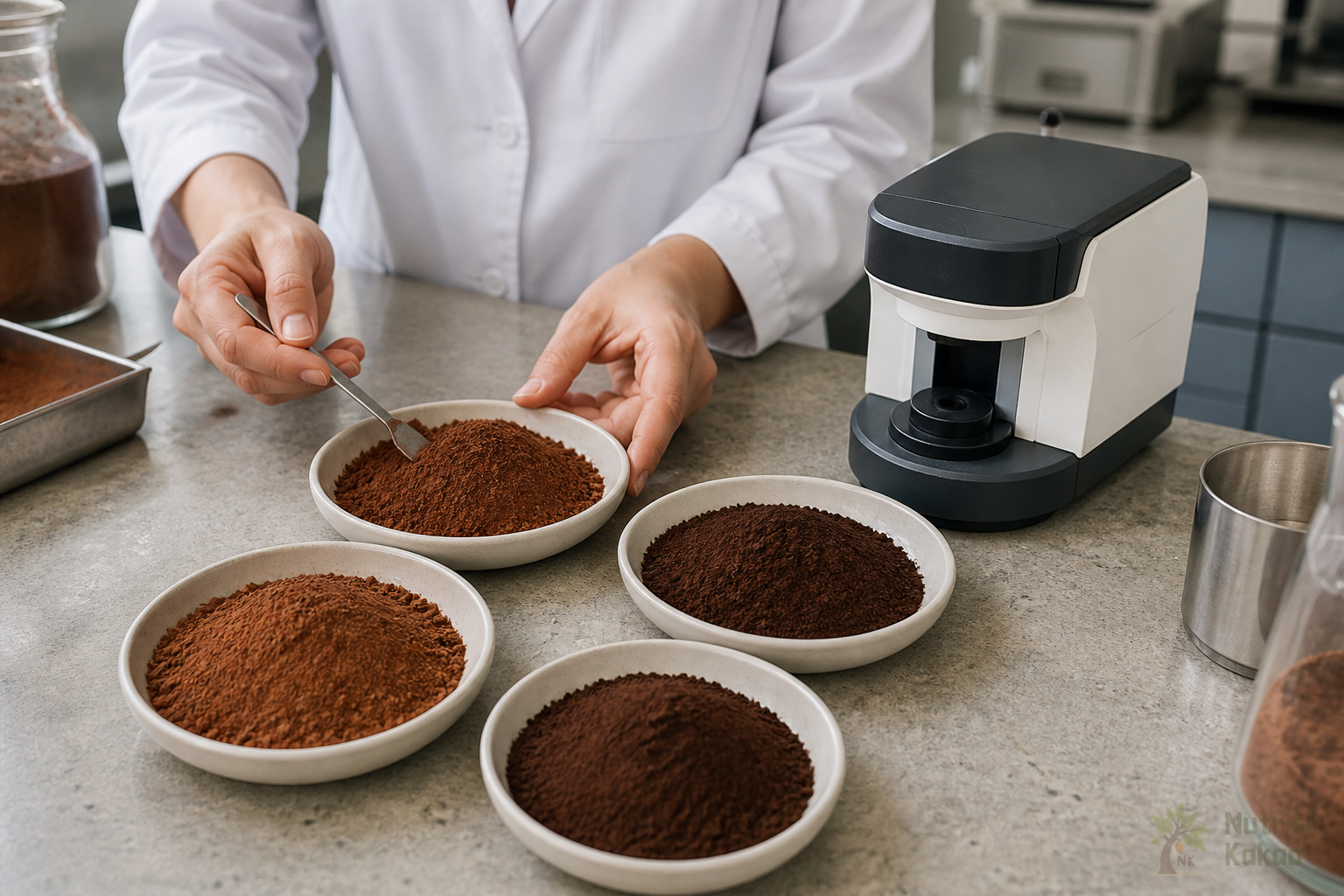
Color Considerations
Natural
Light brown
Alk. Brown
Medium brown
Alk. Dark
Dark brown
Black
Jet black
Quick Reference: Cocoa Powder Selection Checklist
Before ordering, confirm:
- ☐ What leavening agent am I using? (soda vs. powder)
- ☐ What color do I need in the final product?
- ☐ Is creamy mouthfeel important? (consider high-fat)
- ☐ Is this a diet/health product? (consider low-fat)
- ☐ Do I need specific certifications? (Halal, Kosher, Organic)
- ☐ What is my target market's regulatory requirements? (Cadmium levels)
Common Mistakes to Avoid
- Using natural cocoa when recipe calls for Dutch - Results in color and flavor inconsistencies
- Choosing low-fat for beverages - Poor suspension, chalky mouthfeel
- Using black cocoa as 100% cocoa component - Overpowering; blend with natural or brown (typically 30-50% black)
- Ignoring pH in dairy applications - High pH (>8.0) can cause protein coagulation
Need Help Selecting the Right Cocoa Powder?
Our technical team can recommend the ideal grade for your specific application. We offer sample kits for testing.
Request Technical Consultation →