📖 Table of Contents
Why Indonesian Cocoa Matters in 2025
Indonesia is the world's third-largest cocoa producer, supplying around 13% of global volume. What buyers notice first is not just volume, but how Sulawesi’s volcanic soil and equatorial climate affect flavor, pH, and processing efficiency.
Key Statistics (2025):
- Annual production: ~700,000 metric tons of cocoa beans
- Primary growing region: Sulawesi (75% of Indonesian cocoa)
- Export markets: 30+ countries worldwide
- Processing capacity: Growing domestic processing industry
The Sulawesi Advantage: What Makes Indonesian Cocoa Unique
Sulawesi cocoa beans are not just another commodity—they offer technical advantages that manufacturers increasingly seek:
1. Lower Natural Acidity
Sulawesi beans have naturally higher pH (5.5-6.0) compared to West African beans (pH 5.0-5.5). This lower acidity means:
- Less alkali required during Dutch processing
- Darker, richer colors achievable without over-processing
- Smoother flavor profile without harsh acidic notes
2. Higher Cocoa Butter Content
Indonesian beans typically yield 48-52% fat content, slightly higher than the global average. This translates to more cocoa butter per ton processed and creamier end products.
3. Unique Flavor Profile
Sulawesi cocoa is known for:
- Earthy and woody base notes
- Subtle fruity undertones
- Low bitterness compared to African origins
- Excellent for blending with other origins
4. Supply Chain Benefits
- Shorter shipping times to Asia-Pacific markets
- Year-round harvest (unlike West Africa's seasonal peaks)
- Direct trade opportunities with local processors
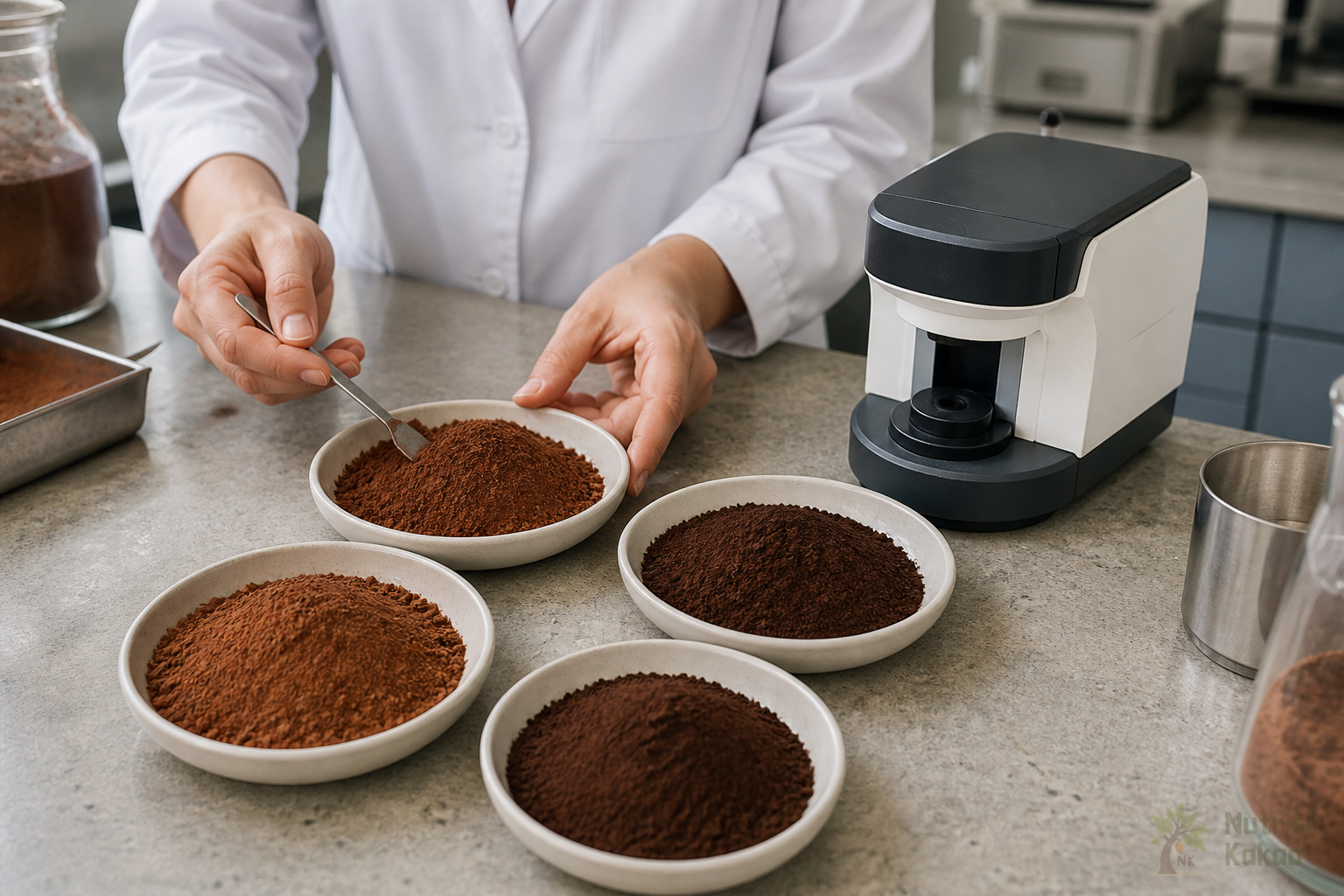
Types of Indonesian Cocoa Powder
| Type | pH Range | Color | Best Applications |
|---|---|---|---|
| Natural (Non-Alkalized) | 5.2 - 5.8 | Light brown | Brownies, recipes with baking soda, health drinks |
| Alkalized Brown | 6.2 - 6.8 | Medium brown | General baking, beverages, ice cream |
| Alkalized Dark Brown | 7.2 - 7.8 | Dark brown | Premium chocolates, specialty confectionery |
| Alkalized Reddish | 7.2 - 8.2 | Reddish brown | Red velvet cakes, specialty desserts |
| Black Cocoa | 7.6 - 8.5+ | Jet black | Oreo-style cookies, dark desserts, visual impact products |
Technical Specifications Guide
When sourcing Indonesian cocoa powder, these are the critical parameters to specify:
Fat Content
- 10-12% (Standard): Most common for baking and general use
- 20-22% (High Fat): Richer mouthfeel, premium applications, beverages
- 4-8% (Low Fat): Diet products, reduced calorie applications
Fineness (Mesh Size)
- 99% through 200 mesh: Standard fineness, suitable for most applications
- 99.5% through 325 mesh: Extra fine, premium chocolate coatings
Moisture Content
- Maximum: 5% (standard)
- Lower moisture = longer shelf life and better mixability
Heavy Metals (Critical for Export)
- Cadmium: < 0.3 ppm (EU standard) / < 0.5 ppm (other markets)
- Lead: < 0.1 ppm
- Sulawesi cocoa typically has naturally lower heavy metal levels than some origins
Certifications to Look For
Quality Indonesian suppliers should hold these certifications:
Food Safety Management
Hazard Analysis
Islamic Compliance
Lab Accreditation
Application Guide by Industry
🍫 Chocolate Manufacturing
Recommended: Natural or lightly alkalized (pH 6.2-6.8)
Indonesian cocoa's low acidity and unique flavor make it excellent for single-origin chocolate bars or as a blending component.
🥧 Bakery Products
Recommended: Alkalized brown or dark brown
- Brownies: Natural cocoa with baking soda
- Chocolate cakes: Alkalized for consistent color
- Cookies: Black cocoa for Oreo-style products
🥤 Beverages
Recommended: High-fat (20-22%) alkalized
Higher fat content creates creamier hot chocolate and better suspension in milk-based drinks.
🍦 Ice Cream & Dairy
Recommended: Alkalized dark brown, 10-12% fat
Alkalized powder disperses better in dairy matrices and provides rich color.
How to Source Indonesian Cocoa Powder
Step 1: Define Your Specifications
- Type (Natural/Alkalized/Black)
- Fat content requirement
- pH range needed
- Volume (annual tonnage)
- Packaging requirements
Step 2: Verify Supplier Credentials
- Request factory audit reports
- Verify certifications with issuing bodies
- Ask for customer references
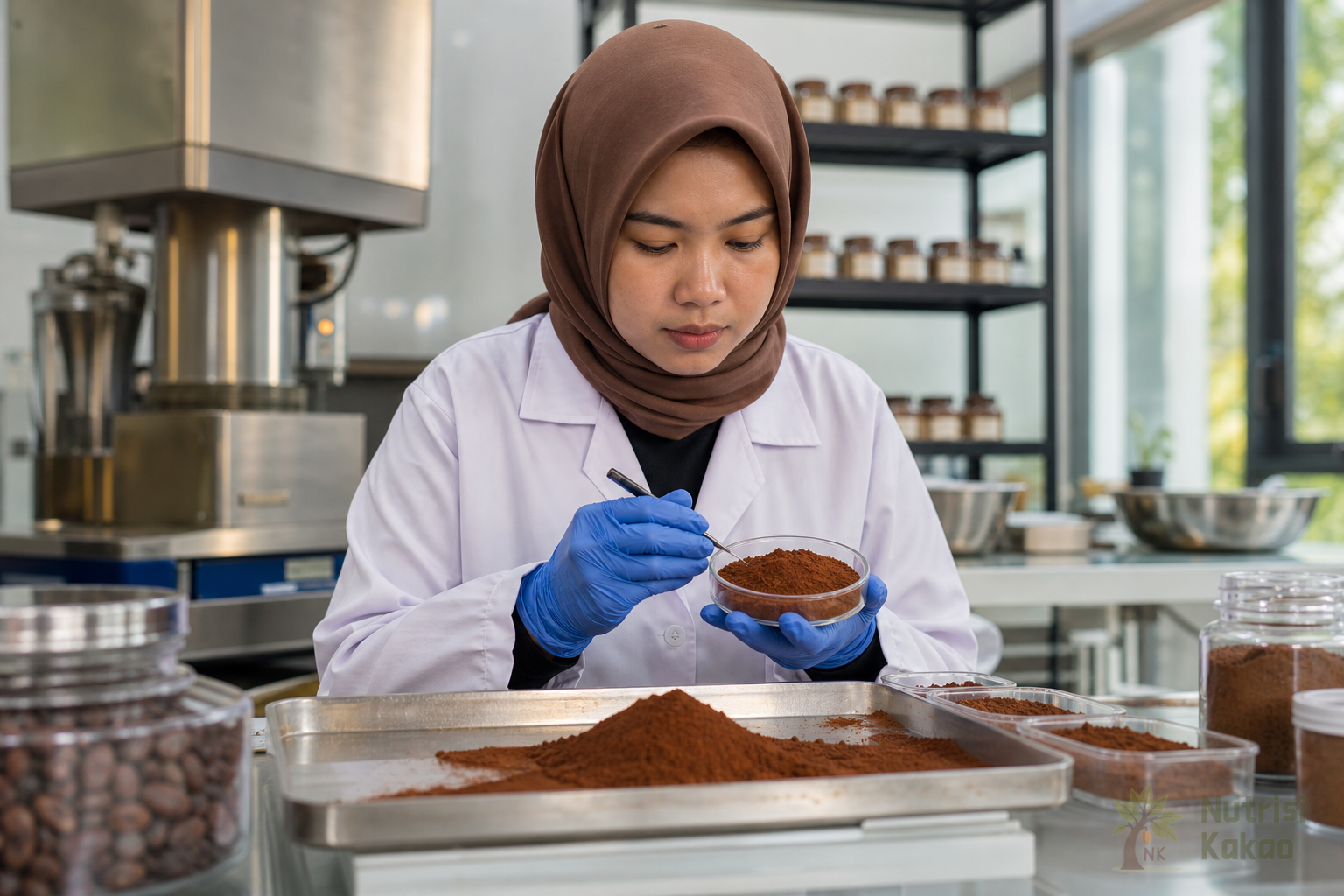
Step 3: Sample Testing
- Request 500g-1kg samples
- Test in your production environment
- Verify COA (Certificate of Analysis) matches actual product
Step 4: Trial Order
Start with 1-5 MT trial order before committing to larger volumes.
Frequently Asked Questions
Q: What is the minimum order quantity (MOQ) for Indonesian cocoa powder?
A: Most manufacturers offer MOQs starting from 1 metric ton for initial orders. Sample quantities (5-25kg) are typically available for testing.
Q: How does Indonesian cocoa compare to Dutch/European cocoa?
A: "Dutch cocoa" refers to the alkalization process, not origin. Indonesian processors can produce Dutch-process (alkalized) cocoa powder that meets or exceeds European quality standards, with quotes depending on grade, order size, destination, and documentation requirements.
Q: Is Indonesian cocoa suitable for organic certification?
A: Yes. Many Indonesian farmers are transitioning to organic practices. Ask suppliers specifically for organic-certified options if required.
Ready to Source Premium Indonesian Cocoa?
PT Nutrisi Kakao Indonesia offers current factory quotes, full certifications (ISO 22000, HACCP, HALAL), and in-house ISO/IEC 17025 laboratory testing.
Request a Quote →