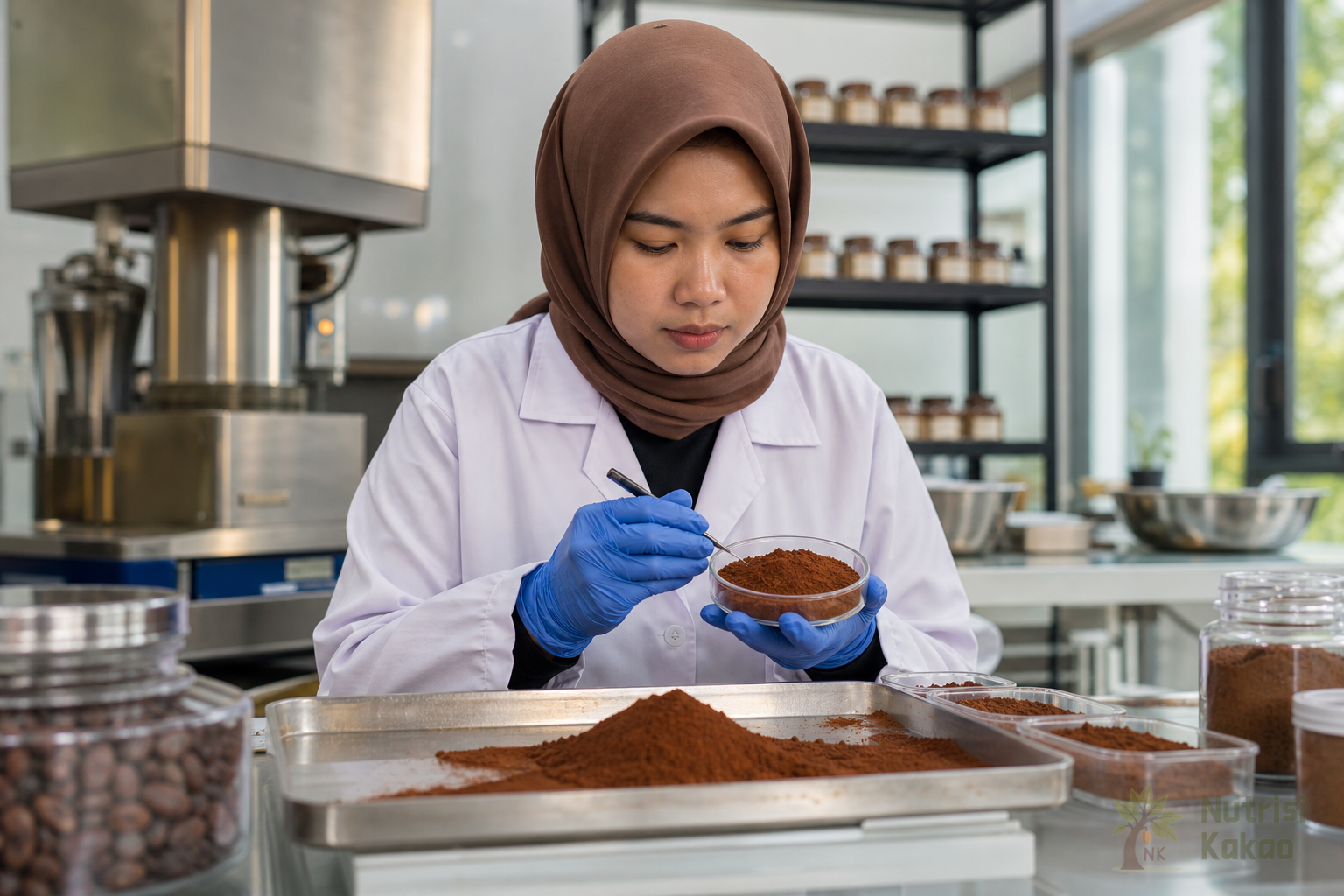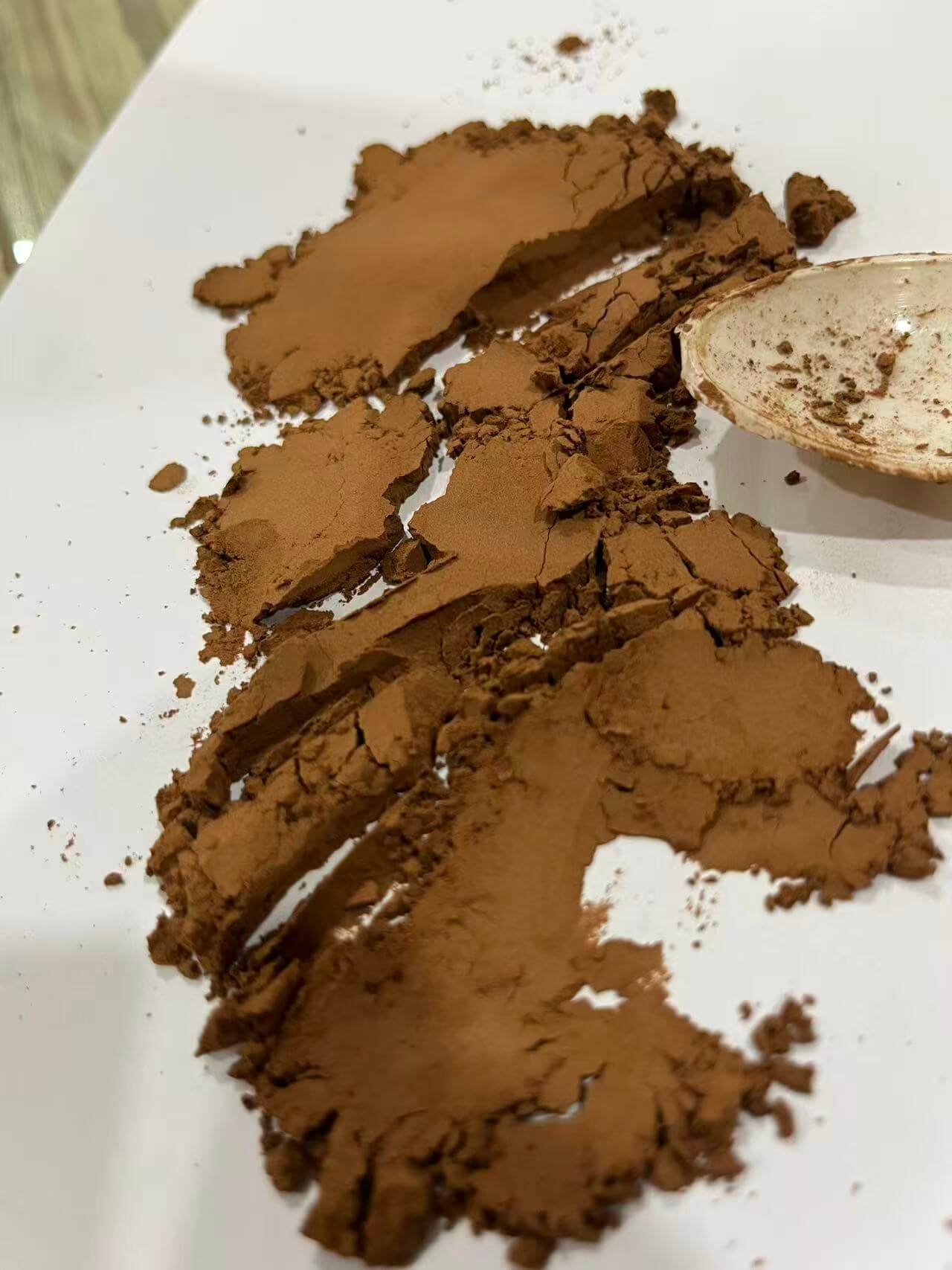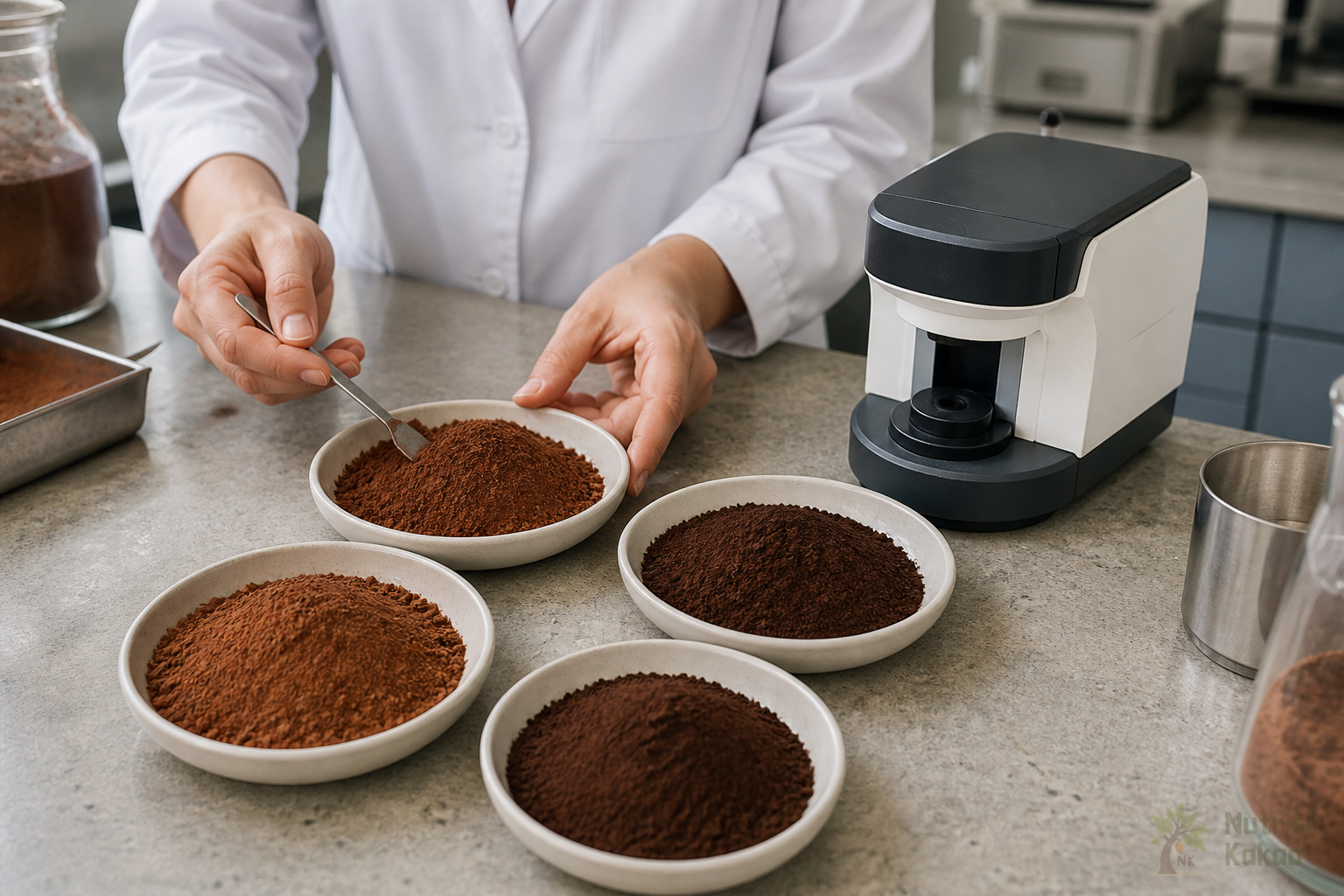
A cocoa powder can meet its fat, moisture, and microbiological specifications and still create an obvious color shift on the production line. For biscuit, beverage, ice cream, filling, and coating manufacturers, that shift can trigger rework, packaging mismatches, customer complaints, or an unnecessary formula adjustment.
The solution is not to ask a supplier for “dark brown” or approve a powder from a phone photo. Industrial color control requires a shared numerical target, a repeatable measurement method, and a final-product trial that reflects how the cocoa will actually be used.
1. Turn Color Language into Measurable Data
Visual descriptions such as light brown, reddish brown, dark brown, and black are useful for initial screening, but they are not precise enough for a purchase specification. Lighting, screen settings, sample depth, and the observer can all change the apparent result.
A common objective approach is the CIE L*a*b* color space:
- L* describes lightness, from black toward white.
- a* describes position on the green-to-red axis.
- b* describes position on the blue-to-yellow axis.
- Delta E summarizes the numerical distance between a reference and a measured sample. The calculation method must be stated because more than one Delta E formula is used.
These values make comparison possible, but they do not create a universal “good” cocoa color. The right target and tolerance depend on the approved reference, the measurement setup, the formula, and what variation remains visible or acceptable in the finished product.
2. Understand Why Cocoa Powder Color Changes
Batch variation rarely has one cause. Color develops across the entire cocoa process, so buyers should evaluate the process behind the number.
Raw material and roasting
Bean origin, variety, fermentation, drying, storage, and roast profile influence the starting pigments and browning reactions. A supplier may therefore need controlled raw-material selection or blending to keep a commercial grade within its approved range.
Alkalization conditions
Alkali type and concentration, temperature, time, water content, pressure, mixing, and exposure to oxygen can all influence the final color. Research on cocoa alkalization shows that these process variables affect L*, a*, b*, pH, and other quality properties. A darker result is often associated with more intensive alkalization, but pH and color are not interchangeable specifications.
Pressing, milling, and powder condition
Residual fat, particle-size distribution, agglomeration, and surface texture affect how light interacts with the powder. Moisture pickup or poor storage can also change powder condition and make a visual comparison less reliable.
The measurement itself
Powders are especially sensitive to presentation. Cup type, fill depth, compaction, surface leveling, instrument geometry, calibration, illuminant, observer setting, and number of readings can change the reported result. Two laboratories can test the same lot and disagree if their methods are not aligned.
3. Standardize the Measurement Protocol Before Setting a Tolerance
A color limit has little value without a method. Buyer and supplier should document the same protocol before commercial approval:
- Approve a physical reference lot and retain sealed samples at both locations.
- Identify the instrument type, measurement geometry, illuminant, and observer setting.
- Define sample conditioning, cup or cell, fill depth, leveling, and whether the powder is measured loose or compacted.
- Calibrate according to the instrument procedure and record multiple readings from a representative sample.
- State the color-difference formula and rounding convention used for acceptance.
- Confirm the dry-powder result with a standard application test.
For incoming quality control, use the same method every time. A repeatable method is more valuable than a very tight tolerance measured inconsistently.
4. Test the Powder in the Real Application
Dry-powder color is an important control point, but it does not fully predict the finished product. Fat, sugar, dairy or plant proteins, water, mixing order, hydration, baking temperature, and product thickness can change the visible shade.
- Biscuits and cakes: bake a controlled pilot using the production formula and compare crust and crumb after cooling.
- Beverages: standardize cocoa concentration, liquid composition, hydration time, temperature, and shear before reading color.
- Ice cream and dairy systems: evaluate the fully dispersed mix and the frozen product because fat, protein, and overrun affect appearance.
- Fillings and coatings: control the fat phase, sugar level, refining, and layer thickness.
The best commercial specification therefore has two gates: an instrumental powder-color range for routine lot control and an application standard for final approval.
5. Write a Purchase Specification That Prevents Disputes
“Match our current cocoa” is not enough. A practical color section in a purchasing agreement should include:
- Approved product grade and reference-lot code.
- Target L*, a*, and b* values with agreed tolerances.
- Delta E formula and maximum agreed difference, if Delta E is used.
- Complete sample-preparation and instrument method.
- Related controls such as pH, fat, moisture, and particle size.
- Sampling frequency, lot-specific certificate requirements, and retained-sample period.
- Application-test recipe, processing conditions, and approval authority.
- Procedure for quarantine, investigation, replacement, or concession when a lot is outside the agreed range.
Do not copy another manufacturer’s numerical tolerance without validation. Build the limit from an approved lot, repeat measurements, pilot production, and the amount of difference your product and customer can accept.
6. Qualify Consistency Across Multiple Lots
A single pre-shipment sample proves only that one sample can meet the target. Before scaling a new source, compare samples from multiple production lots and run at least one controlled plant trial. Record powder color, application color, flavor, dispersion, and processing behavior together.
When commercial deliveries begin, trend the results rather than treating every CoA as an isolated pass or fail. A gradual movement in L*, a*, b*, pH, or moisture may reveal process drift before it becomes a visible customer issue.
7. Use a Simple Incoming-Lot Decision Flow
- Verify lot identity, packaging condition, and sampling records.
- Condition and measure the powder using the agreed protocol.
- Compare L*, a*, b*, and Delta E with the approved range.
- If the result is unusual, repeat the measurement with a fresh representative portion and confirm calibration.
- Quarantine confirmed out-of-range material and compare it with retained supplier and buyer samples.
- Run the defined application test before approving any concession.
- Document disposition and corrective action before the lot enters production.
Final Takeaway
Color consistency is not achieved by buying the darkest powder or demanding an arbitrary Delta E limit. It comes from aligning the reference lot, measurement protocol, process-related specifications, application test, and acceptance workflow.
For concise answers to the most common technical questions, read our FAQ on cocoa powder batch color variation. To compare an approved reference with a production-grade sample, request a sample and technical data.