The Chemistry of Alkalization
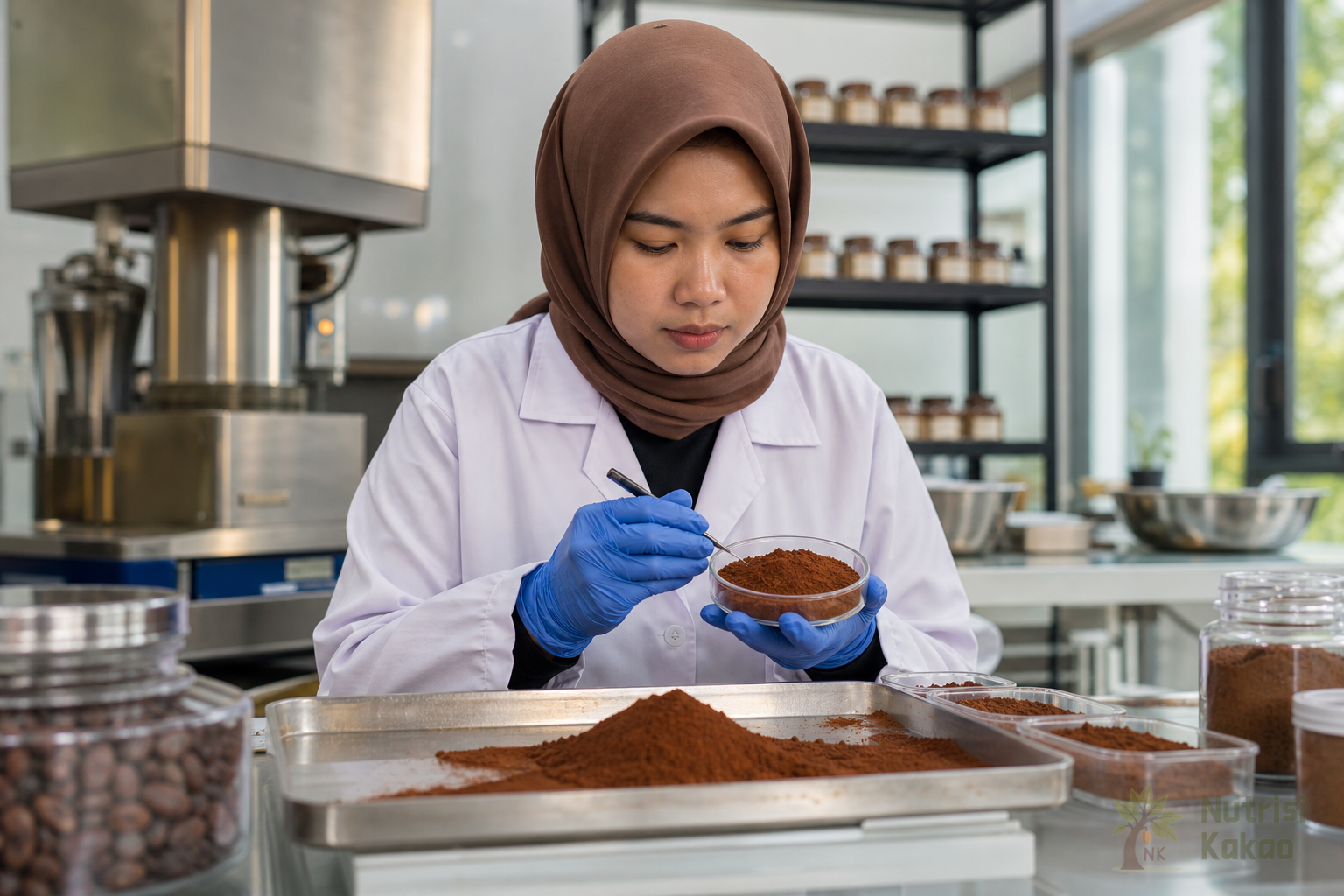
Inside the reactors at PT Nutrisi Kakao Indonesia.
Also known as "Dutching," the alkalization of cocoa powder is arguably the most critical value-add step in modern cocoa processing. While consumers recognize it simply as "darker cocoa," food scientists rely on it as a precise functional ingredient.
The Chemical Process
Natural cocoa powder is inherently acidic, with a pH ranging from 5.2 to 5.8, containing high levels of organic acids (primarily acetic and lactic acids). During alkalization, cocoa nibs, liquor, or powder are treated with an alkali solution—most commonly Potassium Carbonate (K₂CO₃), though Sodium Carbonate or alkaline earth metal hydroxides are sometimes used.
Under controlled heat (usually 80-120°C) and pressure, the alkaline salts react with the acids. The structural flavonoids (the compounds responsible for color and astringency) undergo oxidation and polymerization.
The 3 Transformations
1. Color Shift (Maillard-like Reactions)
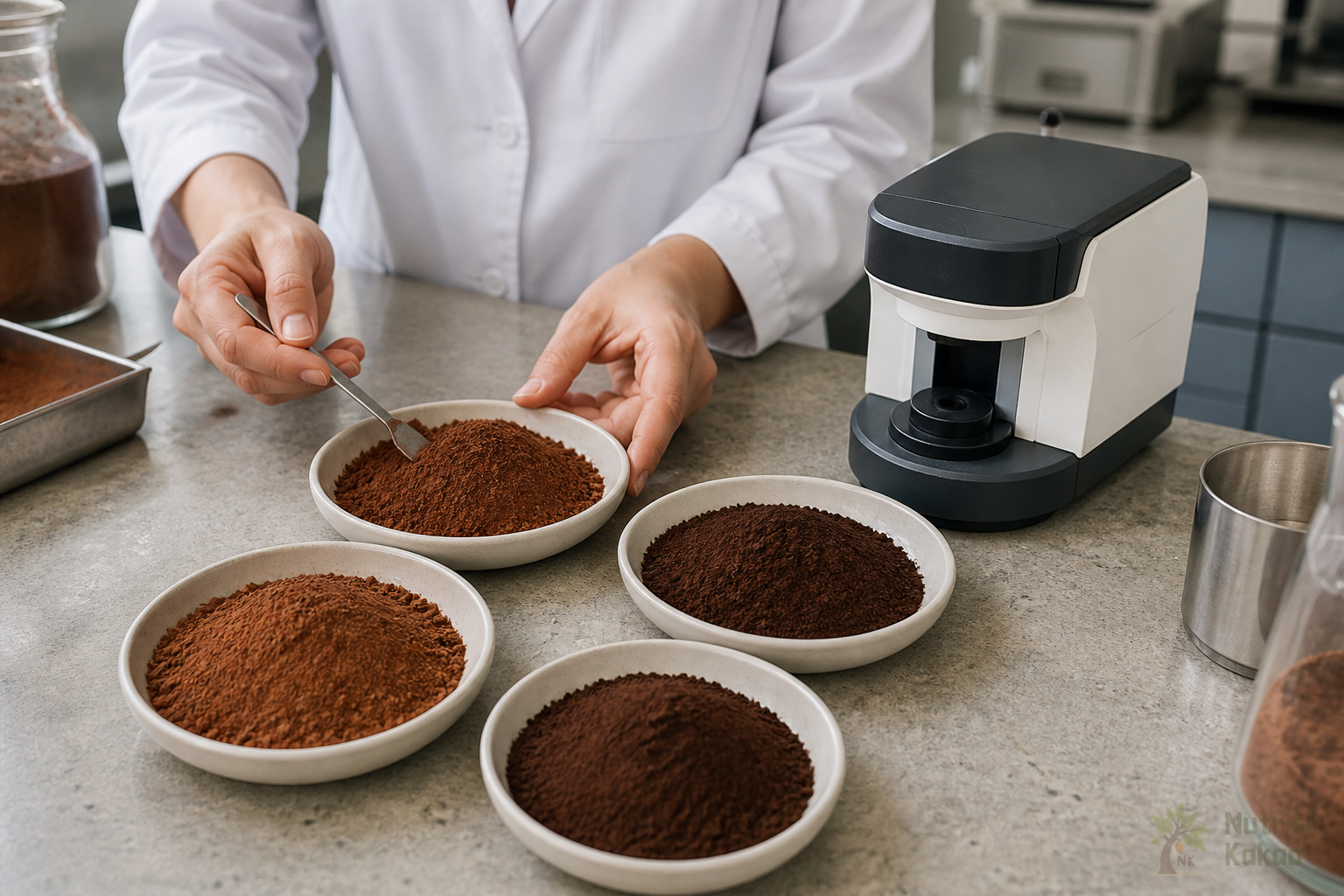
The polymerization of tannins and catechins shifts the visual spectrum of the product. Light brown natural powder transforms into rich reds (pH 6.8-7.2), dark browns (pH 7.2-7.8), or "Oreo" jet blacks (pH 8.0+). This allows food manufacturers to achieve premium visual cues without artificial food dyes.
2. Flavor Neutralization
The acidic, fruity, and astringent notes of natural cocoa are neutralized. The resulting flavor profile is "smoother," earthier, and often perceived as more "chocolaty" by mass-market consumers. Alkalization reduces the titratable acidity, making it easier to pair with dairy ingredients without curdling risk.
3. Enhanced Solubilization (Wettability)
This is the secret weapon for beverage manufacturers. The alkalization process modifies the surface tension and disrupts the cellular matrix of the cocoa solids. Heavy alkalization breaks down the cell walls further, significantly improving the dispersibility and suspension stability of the powder in liquids like cold milk or water.
Why pH Tolerance Matters for Buyers
If a supplier quotes an alkalized cocoa powder with a pH range of "7.0 to 8.5," they lack process control. A variation of 1.5 pH points is massive in commercial baking. A shift from 7.2 to 8.0 will completely alter the leavening mechanism of a cake, collapsing the crumb structure and causing soapy aftertastes from unreacted baking powder.
Precision Engineering at NK Cocoa
We maintain strict 0.4 pH point tolerances for all our commercial grades. If you order our Deep Red Alkalized Powder (Target pH 7.2), you will receive a COA confirming 7.0-7.4 every single time.