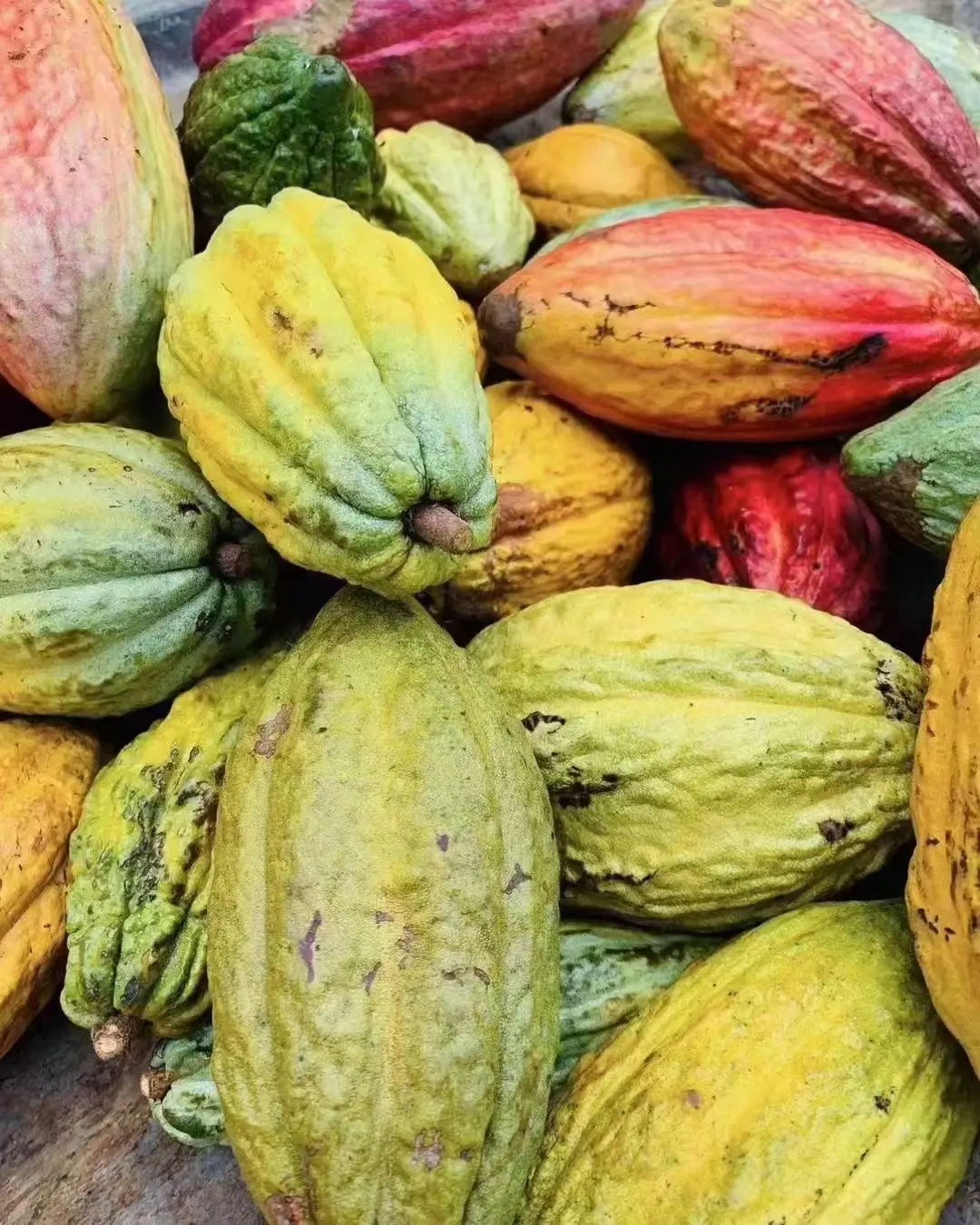
What Are the Best Practices for Sustainable Cocoa Sourcing in 2026?
From greenwashing to genuine impact: what actually works.
With the EU Corporate Sustainability Reporting Directive (CSRD) requiring Scope 3 emissions disclosure, your cocoa supplier's sustainability is now your regulatory problem. Here's how to source responsibly without falling for marketing hype:
1. Demand Third-Party Verification (Not Self-Certification)
Anyone can claim "sustainable practices." Look for these independently audited certifications:
Essential Certifications:
- Rainforest Alliance: Farm-level environmental and social standards
- Fairtrade: Guarantees minimum farmer prices and community premiums
- ISO 14001: Environmental management system
- B Corp: Holistic social and environmental performance (rare in cocoa, but gold standard)
Carbon-Specific Verification:
- TÜV SÜD / Bureau Veritas: Carbon neutral / carbon negative claims
- SBTi (Science Based Targets): Emissions reduction targets aligned with Paris Agreement
- CDP (Carbon Disclosure Project): Transparent climate reporting
At NK Cocoa: We hold Rainforest Alliance, ISO 22000, and achieved TÜV SÜD-verified carbon neutrality in 2025 (Southeast Asia's first cocoa processor to do so).
2. Verify Traceability to Farm Level
True sustainability requires knowing where every bean came from. Progressive suppliers provide:
- GPS coordinates of source cooperatives
- Farmer lists with gender breakdown (women's empowerment is a key ESG metric)
- Land use maps showing no deforestation
- Living income benchmarks: Proof farmers earn above poverty line
3. Assess Carbon Footprint Transparency
Ask suppliers for their full Scope 1, 2, and 3 emissions breakdown:
- Scope 1: Direct emissions (factory operations, transport fleet)
- Scope 2: Indirect emissions (electricity purchased)
- Scope 3: Supply chain emissions (farming, packaging, distribution)
📊 NK Cocoa 2025 Emissions Data
Baseline (2024): 847 tons CO₂/year
Current (2025): 290 tons CO₂/year (-66%)
Offsets: 180 tons CO₂ via reforestation + 110 tons purchased credits
Net: Carbon Neutral (TÜV SÜD verified)
4. Evaluate Social Impact Programs
Sustainability isn't just environmental. Best-in-class suppliers invest in:
- Farmer training: Agronomy, post-harvest handling, business skills
- Community infrastructure: Schools, health clinics, clean water
- Women's empowerment: Leadership roles in cooperatives
- Child labor monitoring: Active systems, not just policies
5. Choose Shorter Supply Chains When Possible
Geography matters for carbon footprint:
- West Africa → EU: 9,200 km, 35-45 days transit (via Cape of Good Hope post-Red Sea crisis)
- Indonesia → Asia-Pacific: 1,800-3,500 km, 12-18 days transit
For Asian manufacturers, Indonesian cocoa can reduce Scope 3 emissions by 40-60% vs. African sources.
6. Demand Continuous Improvement Targets
"Sustainable" is not a destination—it's a journey. Ask suppliers:
- What's your 2030 target? (Carbon neutral is 2026 baseline, not the end goal)
- Renewable energy roadmap? (Solar, biogas, wind)
- Waste reduction goals? (Zero-waste-to-landfill, circular economy)
- Living wage commitment? (Beyond fair trade minimums)
The Cost Reality
Certified sustainable cocoa costs 12-25% more than conventional. But consider:
- Regulatory compliance: CSRD/EUDR fines can reach 4% of annual turnover
- Brand reputation: One greenwashing scandal = years of damage
- Consumer demand: 68% of EU consumers willing to pay premium for verified sustainable products (2025 Eurobarometer survey)
Red Flags to Watch For
⚠️ Warning signs of greenwashing:
- Vague claims like "eco-friendly" without certification
- Self-certified "carbon neutral" (no third-party verification)
- No published emissions data
- Can't provide farm traceability within 48 hours
- No long-term improvement targets
How to Start
If you're new to sustainable sourcing, take these steps:
- Audit current suppliers: Request certifications and emissions data
- Set internal targets: E.g., "50% of cocoa from verified sustainable sources by 2027"
- Partner with specialists: Suppliers who've already done the hard work (like PT Nutrisi Kakao)
- Communicate transparently: Share progress (and challenges) with customers
At NK Cocoa, we provide:
- Full TÜV SÜD carbon audit reports (shareable with your stakeholders)
- QR code traceability to source farms
- Annual sustainability impact reports
- Support for your CSRD/EUDR compliance documentation
Sustainable sourcing is complex—but with the right partner, it becomes your competitive advantage rather than a compliance headache.