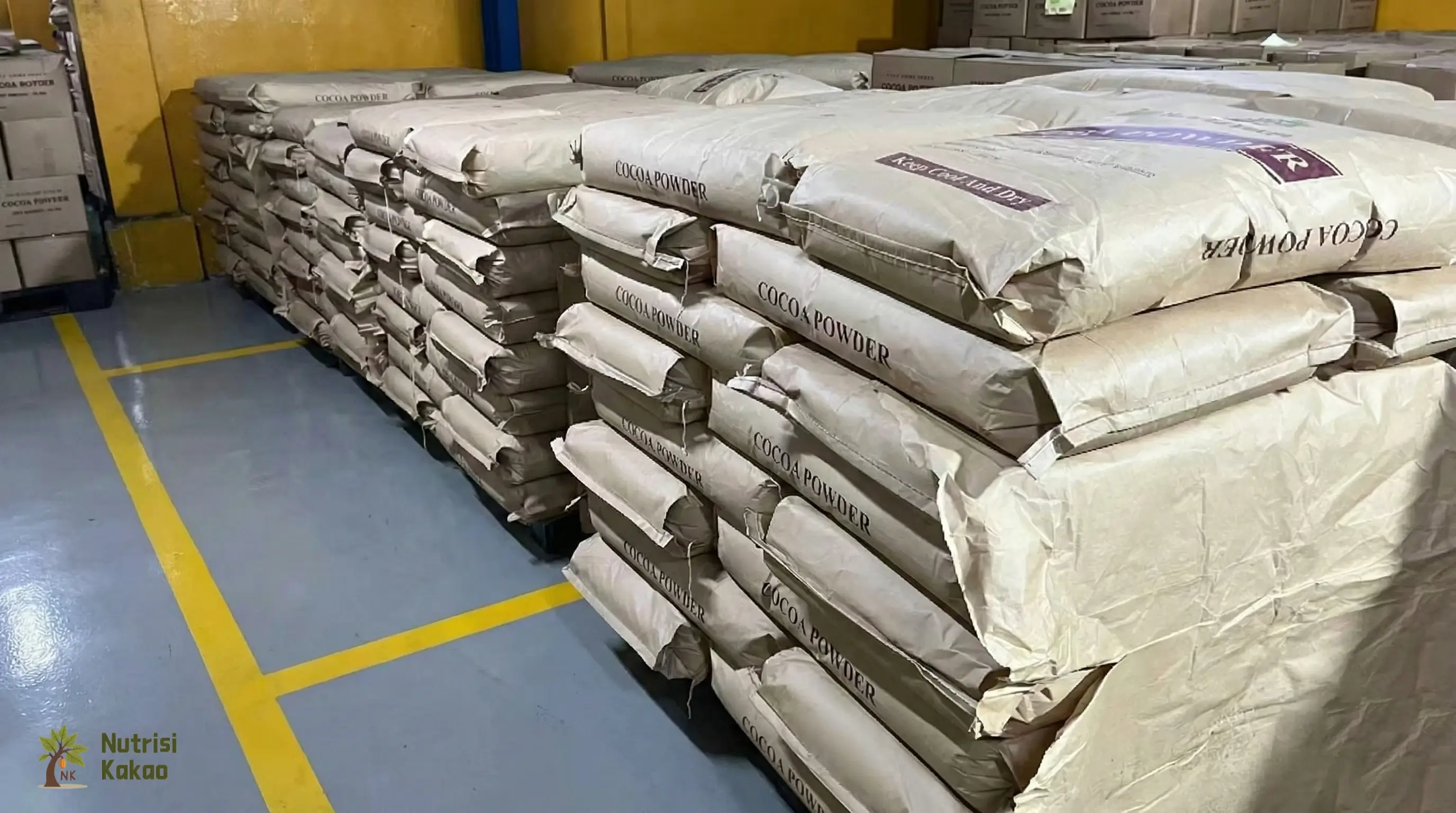
How Should I Store Bulk Cocoa Powder to Maintain Quality?
This is the practical version we share in RFQs.
Proper storage is critical for maintaining cocoa powder quality, especially when buying in bulk (500kg-20MT). Poor storage leads to clumping, off-flavors, mold growth, and rancidity—turning your cost-saving investment into a loss.
Ideal Storage Conditions
Temperature
- Optimal: 15-20°C (59-68°F)
- Acceptable: Up to 25°C (77°F)
- Critical maximum: Below 30°C (86°F)
Why it matters: High temperatures accelerate fat oxidation, causing rancid flavors and reducing shelf life by 50%.
Humidity
- Optimal: 50-60% relative humidity (RH)
- Maximum: 65% RH
- Critical threshold: Above 70% RH = high mold risk
Why it matters: Cocoa powder is hygroscopic (absorbs moisture). Excess moisture causes clumping, microbial growth, and loss of flavor.
Light Exposure
- Requirement: Store in dark or low-light conditions
- UV light degrades antioxidants and causes flavor deterioration
Ventilation
- Good air circulation prevents condensation and hot spots
- Avoid sealing warehouse completely—allow gentle air movement
Packaging Best Practices
Original Packaging (25kg Bags)
Standard multi-wall kraft paper bags with PE (polyethylene) liner:
- Do: Keep bags sealed until use
- Do: Fold over top tightly after opening and secure with clamps
- Don't: Leave bags open overnight (moisture absorption)
Opened Bags (Partial Use)
- Transfer remaining powder to airtight containers (food-grade plastic buckets with lids)
- Or use heavy-duty zip-lock bags inside the original kraft bag
- Label with opening date (use within 6 months after opening)
Bulk Storage (Silos/Tanks)
For manufacturers using 10+ MT/month:
- Use food-grade stainless steel or PE-lined storage silos
- Install dehumidifiers to maintain < 60% RH
- Implement FIFO (First In, First Out) rotation system
- Clean silos every 6 months to prevent old stock contamination
Warehouse Setup Guidelines
Palletization
- Always use pallets—never stack bags directly on floor (moisture + pest risk)
- Minimum 10cm (4 inches) clearance from floor
- Minimum 30cm (12 inches) clearance from walls (air circulation)
- Maximum stack height: 5-6 bags high (avoid crushing bottom bags)
Segregation
- Store cocoa powder away from strong-smelling products (spices, chemicals, fish) as it absorbs odors
- Separate different batches/production dates for traceability
- Keep organic and conventional cocoa in separate zones (if handling both)
Pest Control
⚠️ Critical Pest Prevention:
- Install insect screens on windows and ventilation openings
- Monthly fumigation or traps for rodents and insects
- Regular inspections for signs of infestation (droppings, holes in bags)
- Sealed doors and walls—no gaps > 6mm
Shelf Life Management
Expected Shelf Life (Under Ideal Conditions)
| Cocoa Powder Type | Unopened (Sealed) | Opened (Resealed) |
|---|---|---|
| Natural Cocoa Powder | 24-36 months | 6-12 months |
| Alkalized Cocoa Powder | 18-24 months | 6-9 months |
| High-Fat Cocoa (20-24%) | 18-24 months | 4-6 months |
Note: High-fat cocoa has shorter shelf life due to higher cocoa butter content (fat oxidation risk).
FIFO Implementation
- Label each pallet/batch with arrival date and best-before date
- Position older stock at front/accessible areas
- Conduct monthly stock rotation audits
Signs of Quality Degradation
🚨 Discard cocoa powder if you observe:
- Clumping: Hardened lumps that don't break apart easily (moisture damage)
- Mold: White/green spots or fuzzy growth
- Off-odor: Musty, moldy, or rancid smell (instead of chocolate)
- Flavor change: Bitter, sour, or cardboard-like taste
- Color change: Fading or development of whitish film (fat bloom)
- Pest infestation: Insects, larvae, or rodent droppings
Climate-Specific Considerations
Tropical/Humid Climates (Southeast Asia, Central America, Africa)
- Challenge: High humidity (75-95% RH) year-round
- Solution:
- Install industrial dehumidifiers (target 55-60% RH)
- Use air conditioning in storage room if budget allows
- Increase inspection frequency to weekly
- Consider smaller, more frequent orders (reduce storage time)
Hot/Dry Climates (Middle East, Southern US)
- Challenge: High temperature (35-45°C) but low humidity
- Solution:
- Air-conditioned warehouse essential
- Reflective roofing to reduce heat gain
- Thermal insulation
Cold Climates (Northern Europe, Canada)
- Challenge: Condensation when bringing cold stock into warm production areas
- Solution:
- Allow bags to reach room temperature gradually (12-24 hours) before opening
- Never open cold bags immediately (moisture will condense on powder)
Cost-Benefit of Proper Storage
💰 Investment vs. Loss Prevention:
Scenario: You buy a 16 MT container and need the product to remain usable across the full shelf-life window.
- Basic storage setup:
- Pallets and floor clearance
- Humidity control or dehumidifier support
- Routine pest control
- FIFO labels and monthly inspection
- Potential losses from poor storage:
- Moisture damage, clumping, and flavor loss
- Rejected batch due to mold or contamination
Proper storage is inexpensive compared with the risk of losing a container-level shipment.
✅ Storage Checklist:
- Temperature: 15-25°C
- Humidity: < 65% RH
- Palletized storage (10cm off floor)
- Airtight resealing after opening
- FIFO rotation system
- Monthly quality inspections
- Pest control program
- No direct sunlight exposure