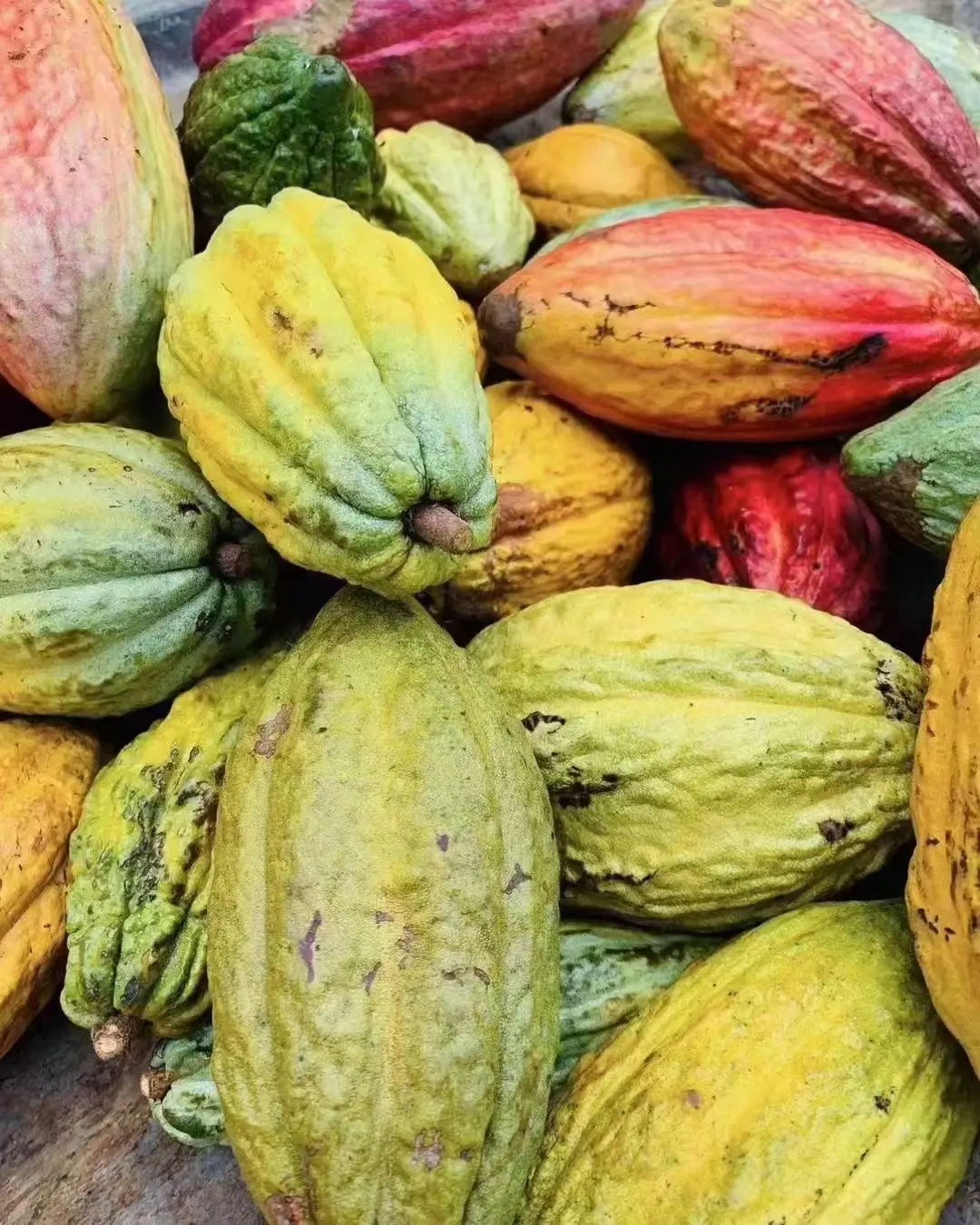
What Are the Best Countries to Source Cocoa Powder From?
Here is the direct answer we give procurement teams.
Global cocoa powder supply comes primarily from major bean-producing regions in Africa, Asia, and Latin America. Each origin offers distinct advantages in pricing, quality, logistics, and certifications.
Major Cocoa Powder Exporting Regions
1. Indonesia (Southeast Asia)
Market position: 3rd largest cocoa bean producer globally, major processor and exporter.
Strengths:
- Competitive pricing: Strong landed-cost position due to integrated production and regional logistics
- Halal certification: Default for most processors (critical for Middle East, Malaysia, Indonesia markets)
- Strategic location: Shorter shipping to Asia-Pacific (Thailand, China, India, Australia)
- Bean characteristics: Robust, strong flavor suitable for alkalized processing
- Food safety infrastructure: Modern ISO 22000/HACCP facilities
Considerations:
- Lower natural antioxidant levels compared to fine-flavor South American beans
- Volcanic soil → requires strict cadmium testing (though managed by reputable processors)
Best for: Industrial manufacturers in Asia, Middle East, and buyers requiring Halal certification at competitive prices.
2. Côte d'Ivoire & Ghana (West Africa)
Market position: Côte d'Ivoire is the world's #1 cocoa producer (40%+ global supply).
Strengths:
- Massive scale: Most reliable supply volume globally
- Well-established trade routes: Excellent logistics to Europe and North America
- Consistent quality: Standardized grading systems (especially Ghana's premium grade)
- Sustainability programs: Many processors offer Fair Trade and Rainforest Alliance certified options
Considerations:
- Price volatility: Subject to international cocoa futures market fluctuations
- Longer lead times: To Asia-Pacific markets (45-60 days shipping)
- Child labor concerns: Some buyers avoid due to supply chain ethics issues (verify certifications)
Best for: European and North American buyers, large corporations with sustainability requirements.
3. Ecuador & Peru (South America)
Market position: Known for "fine flavor" cocoa (arriba, CCN-51 varieties).
Strengths:
- Premium quality: Complex flavor profiles (fruity, floral notes)
- Organic options: Large organic certified production
- Low cadmium: Non-volcanic soils = naturally lower heavy metal levels
- Fair Trade prevalence: Many smallholder cooperatives with social certifications
Considerations:
- Higher pricing: Premium positioning compared with mainstream industrial origins
- Limited capacity: Smaller processing infrastructure vs. Côte d'Ivoire/Indonesia
- Shipping distance: Long routes to Asia (60+ days)
Best for: Premium chocolate manufacturers, organic brands, specialty confectionery.
4. Nigeria & Cameroon (West Africa)
Market position: Emerging processors expanding capacity.
Strengths:
- Growing capacity: Government incentives for local processing
- Competitive pricing: Similar to Côte d'Ivoire
Considerations:
- Less established export infrastructure
- Quality can be inconsistent (verify certifications carefully)
5. Malaysia (Southeast Asia)
Market position: Major cocoa processor despite declining local bean production.
Strengths:
- Advanced processing technology: High-tech facilities
- Halal expertise: Islamic financial and certification infrastructure
- Strategic logistics hub: Excellent shipping to ASEAN, Middle East, China
Considerations:
- Relies on imported beans (mostly from Indonesia and Africa) → less cost-competitive than Indonesia
- Higher processing costs (labor, energy) vs. Indonesia
Origin Comparison Table
| Origin | Price Level | Halal Default | Best Markets | Flavor Profile |
|---|---|---|---|---|
| Indonesia | 💰 Low-Mid | ✅ Yes | Asia, Middle East | Robust, earthy |
| Côte d'Ivoire | 💰💰 Mid | ❌ No (available on request) | Europe, Americas | Classic chocolate |
| Ghana | 💰💰 Mid-High | ❌ No | Europe, Americas | Rich, balanced |
| Ecuador/Peru | 💰💰💰 High | ❌ No (available organic) | Global premium | Fruity, floral, complex |
| Malaysia | 💰💰 Mid | ✅ Yes | ASEAN, Middle East | Variable (depends on bean source) |
Decision Framework: Which Origin to Choose?
🌏 Choose Indonesia If:
- You're manufacturing in Asia-Pacific
- Halal certification is mandatory
- Price competitiveness is critical (cost-sensitive markets)
- You need robust cocoa for heavy alkalization (dark powders)
🌍 Choose West Africa (Côte d'Ivoire, Ghana) If:
- You're in Europe or North America (logistics advantage)
- You need extremely large, consistent volumes
- Your buyers require Fair Trade or Rainforest Alliance certifications
- You want classic chocolate flavor for mass-market products
🌎 Choose South America (Ecuador, Peru) If:
- You're marketing premium/artisan chocolate products
- Organic certification is required
- You want complex, fine-flavor profiles
- Low cadmium is a hard requirement (EU strict markets)
- You can justify higher ingredient costs through premium retail positioning
Logistics & Lead Time Considerations
Shipping Times to Key Markets:
- Indonesia → Thailand/Singapore: 3-7 days
- Indonesia → China/India: 15-20 days
- Indonesia → Middle East: 20-25 days
- Indonesia → USA West Coast: 25-30 days
- Côte d'Ivoire → Europe: 15-20 days
- Côte d'Ivoire → USA East Coast: 20-25 days
- Ecuador → USA: 12-18 days
- Ecuador → Asia: 35-45 days
Sustainability & Ethical Sourcing
If your brand or buyers require ethical sourcing:
- Fair Trade: Most available from Ecuador, Peru, Ghana
- Rainforest Alliance: Widespread in Côte d'Ivoire, Ghana, Ecuador
- Direct Trade / Cooperative Sourcing: Peru, Ecuador (smallholder focus)
- Child Labor-Free Verified: Request Tony's Chocolonely "Roadmap" or similar verification programs
💡 Pro Sourcing Tip:
Don't choose origin based solely on country reputation. Supplier quality matters more than origin. A professional Indonesian processor with ISO 22000 + Halal + low cadmium testing is far better than an uncertified West African trader.
Always prioritize: Certifications > Heavy metal compliance > Factory audit > Origin country